
Podcast: Play in new window | Download
Subscribe (Free) More
In business, we talk about switching costs. That’s the cost of moving from one system to another, changing software, redeveloping policies, or reorganizing personnel in the business. Those shifts cost money, made up of labor and fees for products and services alongside any possible downtime during a switch.
Well, in personal productivity, we have a similar problem. It’s called context switching.
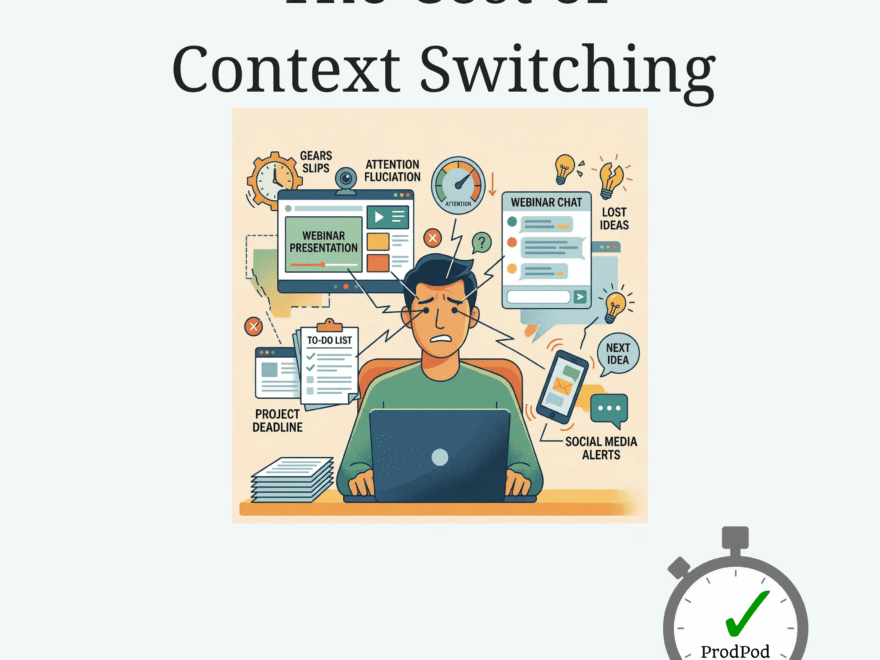
Context switching is what most people call multitasking. But of course, we are not really multitasking (see ProductivityCast, Episode 125, The Myth of Multitasking). We are switching back and forth between tasks, ideas, conversations, and environments. And every time we do that, there’s a cost.
We lose time getting reoriented. We lose focus because our attention becomes more diffuse. We increase the likelihood of mistakes. And we create more opportunities for ideas to slip away before we’ve captured or completed them.
Think about giving a webinar. If I’m teaching and trying to pay too much attention to the chat at the same time, I can lose my train of thought. I may miss an important point I wanted to make, or I may weaken the quality of the presentation because I’m switching contexts too often between teaching, reading, interpreting, and responding.
That is the hidden cost of context switching. It may not show up on a balance sheet, but it absolutely affects your output.
So here’s your productivity exercise for the next week: notice when you switch contexts. Just notice it. When you catch yourself doing it, make a quick mark on a piece of paper, or capture it in your task manager or notes app. Write down what pulled you away, then return to the original task.
That simple act of noticing can help you reduce unnecessary switching, protect your focus, and improve the quality of your work.